


Clayton Glass Administration: Hundreds of Jobs Lost as Blackburn Site Closes
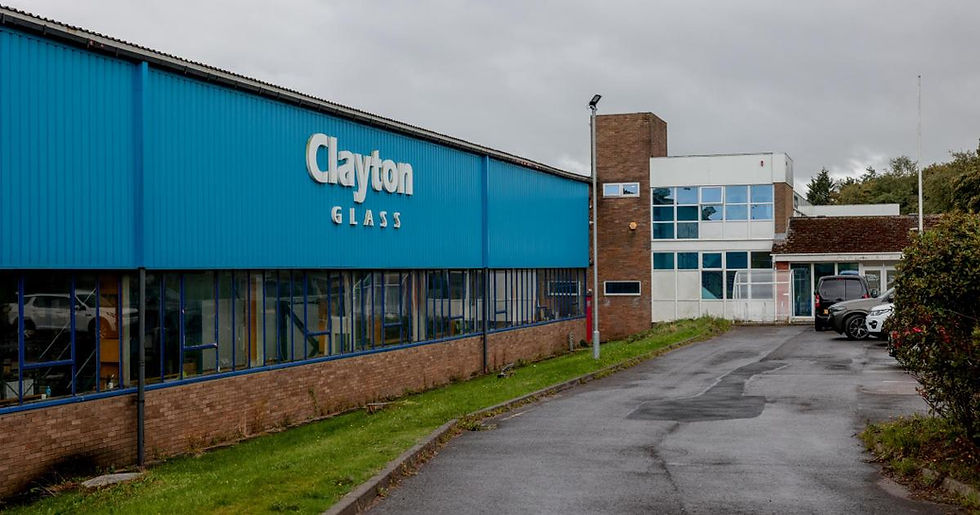
Another Lancashire business has found itself at the sharp end of financial trouble, with the administration of glass manufacturer Clayton Glass resulting in hundreds of redundancies and the closure of its Blackburn operation.
The news is another reminder of just how quickly financial pressure can move from a problem on a company's balance sheet to a very real problem for employees, suppliers and creditors.
According to reports, Clayton Glass has entered administration, with its Blackburn site among those affected. Industry reporting says the group historically employed hundreds of people across its operations, while more than 280 workers have reportedly been left without pay following the collapse.
What happened to Clayton Glass?
Clayton Glass operated in the UK glass manufacturing sector, supplying products to the glazing and construction industries.
The company's difficulties have resulted in an administration process, with different parts of the business and its sites being treated differently. The Blackburn operation is reported to be one of the sites closing.
For the people employed there, the consequences are obvious: jobs have disappeared and employees are having to deal with the uncertainty that comes with an employer entering insolvency.
But employees aren't the only people affected.
Behind almost every company administration is a long list of businesses that are owed money.
What happens to suppliers when a customer goes into administration?
This is where things can become particularly difficult for smaller businesses.
A manufacturer such as Clayton Glass will typically have relationships with dozens, if not hundreds, of other businesses.
Those businesses may have supplied:
- Raw materials
- Transport and haulage
- Engineering services
- Maintenance
- Packaging- Utilities
- Professional services
- Equipment
- Subcontracted labour
When invoices remain unpaid and the customer subsequently enters administration, those creditors can suddenly find themselves chasing money from a company that no longer controls its own finances.
And if several large customers fail at the same time, the impact can spread quickly through the supply chain.
Administration doesn't necessarily mean you should simply write the debt off
One of the biggest mistakes a creditor can make is assuming that an administration automatically means there is nothing they can do.
The position depends on the circumstances, the type of debt, the available assets, the administrator's proposals and the creditor's position within the insolvency process.
There may also be circumstances where a creditor needs to investigate the wider position before deciding what recovery action is appropriate.
That is where professional debt recovery can make a difference.
At Red Flag Specialists, we deal with businesses that are owed money and need somebody to actually pursue it.
Commercial debt recovery after an insolvency
Insolvency can make debt recovery more complicated, but it doesn't necessarily make the underlying debt disappear.
Businesses need to understand exactly:
Who owes the money?
Why is it owed?
What documentation exists?
What is the debtor's current position?
What recovery options are available?
These questions matter whether you're dealing with a straightforward unpaid invoice or a much larger commercial debt.
Sometimes the answer will be to pursue the debt directly.
Sometimes it will involve working alongside solicitors, insolvency practitioners or other professionals.
And sometimes the most sensible option is understanding the position quickly so that further time and money aren't wasted.
The Blackburn impact
For Blackburn, the closure is another blow to an area with a long industrial history.
The town has traditionally had strong links to manufacturing, and the loss of an established industrial employer can have consequences well beyond the employees directly affected.
When a major employer closes, local contractors, suppliers and service businesses can also lose revenue.
That is why insolvency isn't simply a matter between a company and its directors.
There can be a much wider financial chain reaction.
Don't wait until a customer becomes insolvent
For businesses supplying goods or services on credit, one of the most important parts of debt collection is recognising problems before they become an insolvency.
Late payments, broken payment promises, suddenly changing contacts and increasingly difficult communication can all be reasons to look more closely at an account.
The longer an unpaid debt is allowed to sit, the more difficult recovery can become.
At Red Flag Specialists, we believe businesses should be proactive rather than simply hoping an overdue invoice eventually gets paid.
Need help recovering an unpaid debt?
The Clayton Glass situation is a reminder that financial problems can develop quickly.
If your business is owed money, particularly where the amount involved is significant, getting professional advice early can give you a clearer picture of your options.
Red Flag Specialists provides professional debt recovery and debt collection services for businesses across the UK.
We don't promise that every debt can be recovered. Nobody can honestly make that promise.
What we can do is investigate the position, pursue the debtor and give you a realistic assessment of the recovery prospects.
If your business is owed money, contact Red Flag Specialists today to discuss your debt recovery requirements.



Comments