Debt Recovery vs Debt Collection: What’s the Difference?
- May 15
- 3 min read
When unpaid invoices start affecting cash flow, many businesses begin searching for help — but the terms debt recovery and debt collection are often used interchangeably.
Although they are closely related, they are not exactly the same thing.
Understanding the difference can help businesses choose the right approach, protect customer relationships, and improve the chances of recovering outstanding payments quickly and legally.
What Is Debt Collection?
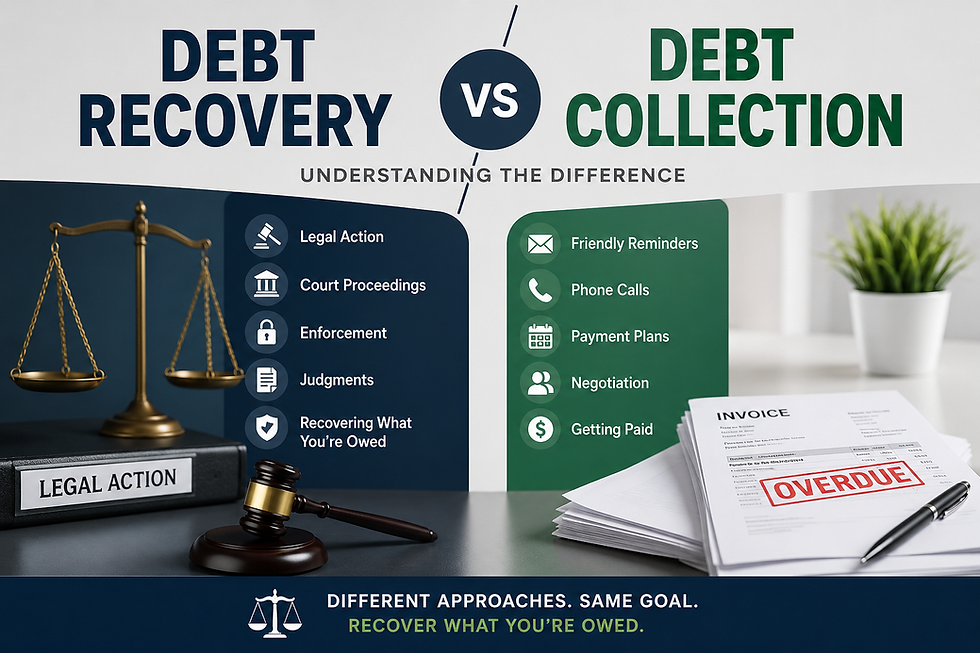
Debt collection is usually the first stage of pursuing unpaid debts.
It focuses on contacting the debtor and encouraging payment before legal action becomes necessary. The aim is to resolve the matter professionally and efficiently while maintaining communication between both parties.
Debt collection commonly includes:
Reminder emails and letters
Telephone contact
Payment requests
Negotiating repayment plans
Sending final notices
Pre-legal recovery actions
In many cases, debt collection resolves the issue without the need for court proceedings.
When Is Debt Collection Used?
Debt collection is typically suitable when:
An invoice is overdue
The customer is still communicating
The debt is undisputed
The business wants to avoid legal escalation
There is still a possibility of preserving the business relationship
For many businesses, early intervention significantly improves recovery success rates.
What Is Debt Recovery?
Debt recovery is a broader term that can include both collection activity and legal enforcement measures.
If standard collection attempts fail, debt recovery may involve escalating the matter through legal channels to secure payment.
Debt recovery services may include:
Letters Before Action
Legal proceedings
County Court Judgments (CCJs)
Enforcement action
Tracing debtors
Insolvency proceedings
High Court enforcement
Debt recovery generally refers to the full process of recovering money owed, including formal legal action where required.
Key Differences Between Debt Collection and Debt Recovery
Debt Collection | Debt Recovery |
Usually early-stage action | Can include legal enforcement |
Focuses on communication and negotiation | Focuses on obtaining payment through all available channels |
Often informal or pre-legal | May involve solicitors or court action |
Used for overdue invoices | Used when debts remain unpaid after collection attempts |
Aims to preserve relationships | Prioritises securing payment |
Which Option Is Right for Your Business?
The right approach depends on the situation.
Debt Collection May Be Best If:
The debt is relatively recent
The client normally pays on time
You want to maintain the relationship
The debtor is responding to communication
Debt Recovery May Be Necessary If:
The debtor is ignoring contact
The invoice is seriously overdue
The debt is disputed
Previous collection attempts failed
Legal action is required
Acting quickly is important. The longer a debt remains unpaid, the lower the likelihood of successful recovery.
Why Businesses Use Professional Debt Recovery Services
Managing overdue accounts internally can take time away from running the business. Professional debt recovery specialists provide experience, legal knowledge, and structured recovery processes that often improve results.
Benefits include:
Faster recovery of unpaid invoices
Reduced internal workload
Professional communication with debtors
Legal compliance
Improved cash flow
Higher recovery success rates
Many providers also offer “no collection, no fee” services, helping businesses reduce financial risk.
Can Debt Recovery Affect Customer Relationships?
One of the biggest concerns for businesses is protecting client relationships.
Professional debt recovery companies aim to recover outstanding balances while maintaining a respectful and compliant approach. Early intervention and clear communication often help resolve issues before legal action becomes necessary.
In many cases, businesses find that using a third party creates a more professional and less emotional recovery process.
Final Thoughts
Debt collection and debt recovery are closely connected, but they serve different purposes.
Debt collection focuses on early-stage communication and securing payment before escalation. Debt recovery covers the wider process, including legal enforcement where necessary.
For businesses dealing with unpaid invoices, taking action early can improve recovery rates and protect cash flow before debts become harder to recover.
If your business is struggling with overdue accounts, professional support can help recover outstanding payments quickly, legally, and efficiently.



Comments