


M&Co Collapse Laid Bare: Historic Scottish Retailer Owed £46m When It Fell Into Administration
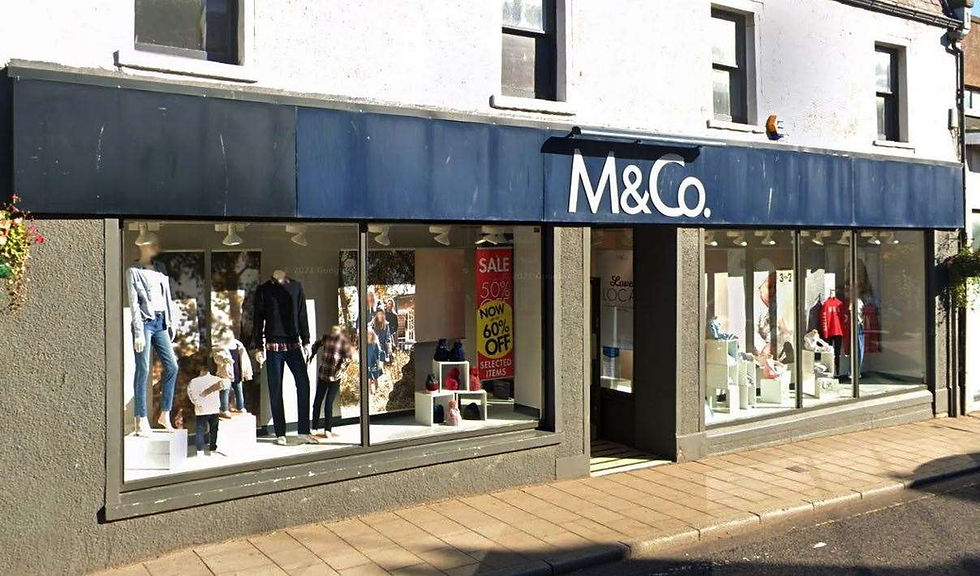
High street names don't disappear overnight, and the final paperwork from M&Co's collapse is a reminder of just how long the warning signs can sit in plain sight before a business finally runs out of road.
Newly published administrators' documents have confirmed the full scale of the failure at M&Co, the Scottish clothing chain that traced its roots back nearly two centuries. The papers show the retailer owed more than £46 million when it fell into administration, with over 600 unsecured creditors left facing losses running to more than £33 million between them.
A Business That Had Already Been Here Before
M&Co's story is a textbook case of a company that survived one crisis only to be undone by the next. Founded in Paisley in 1834 as a pawnbroking business, the firm converted to clothing retail in 1953 under brothers Len and Iain McGeoch, and later rebranded as M&Co in 2005.
The business first collapsed in 2020, at the height of the pandemic, when collapsing footfall pushed it into administration under Deloitte. On that occasion the founding family bought the assets back, saving around 2,600 jobs across 215 stores — though 47 shops were still lost in the process.
That rescue bought M&Co barely two years. By December 2022, with input costs rising sharply and consumer confidence deteriorating in the cost-of-living crisis, the retailer was back in administration — this time with Teneo Financial Advisory installed as joint administrators. Every one of its 168 remaining stores was shuttered, and roughly 1,800 jobs were lost. The brand and intellectual property were eventually bought out of administration by AK Retail Holdings, owner of Yours Clothing, but the physical store estate itself was not part of that deal.
What the Final Numbers Show
The recently lodged filings, which move the case from administration into formal dissolution, disclose figures that will be painfully familiar to anyone who has sat on a creditor list for a failed retailer:
• £46m+ owed in total by the time the business collapsed
• 600+ unsecured creditors caught in the fallout
• £33m+ owed to those unsecured creditors, of which the vast majority will never be recovered
• 2.32p in the pound — the return ultimately paid out to non-preferential unsecured creditors, via an £800,000 prescribed part distribution
• 1,800 jobs lost as all stores closed
As the administrators put it in their report, insufficient funds were realised to pay a dividend to non-preferential unsecured creditors beyond that prescribed part payment — meaning the overwhelming majority of what was owed has simply been written off by the businesses that supplied and traded with M&Co.
The Red Flags Were There Long Before Administration
What makes cases like M&Co so instructive isn't just the size of the final shortfall — it's how much runway there was to see trouble coming. A second insolvency inside three years, rising supplier arrears well before the formal filing, a looming breach of lending covenants, and debt maturing into a refinancing market that had turned hostile: these are precisely the kind of signals that, spotted early, give a creditor time to act while a debt can still be recovered — rather than after it has been swallowed into a general pool of unsecured claims.
For the 600-plus firms left chasing a share of £33 million, the hard truth is that once a company enters administration, options narrow fast. Unsecured creditors go to the back of the queue behind administrators' fees, secured lenders and preferential claims, which is exactly why M&Co's creditors are being left with barely 2p in the pound. By the time a business files for administration, it's usually too late to negotiate — the moment to chase outstanding invoices hard, formally, and fast has already passed.
A business doesn't go from healthy to insolvent overnight; it deteriorates through slowing payments, part-payments, broken promises, and requests for “just a bit more time.” Every one of those moments is an opportunity to escalate recovery action before a debtor's remaining assets are gone — and every month a debt is left unchased is a month closer to it becoming irrecoverable.
That's where we come in.
The Takeaway for Trade Creditors
M&Co's collapse is a reminder that a well-known brand and a loyal customer base are not, on their own, protection against a customer going under and that unpaid invoices owed by a struggling company don't get easier to recover the longer they're left.
Businesses owed money by any customer, however established, should:
• Act on overdue invoices immediately rather than waiting to see if payment “sorts itself out”
• Escalate formal recovery action at the first sign a debtor is stalling, not after months of chasing
• Keep a close eye on customers showing signs of financial strain repeat late payment, part-payments, or a history of prior insolvency
• Get outstanding debts into professional recovery hands before a customer's position deteriorates into administration, when unsecured creditors are typically left with pennies in the pound, as M&Co's have been
At Red Flag Specialists Ltd, debt recovery is what we do. If you're owed money by a customer showing warning signs , or you've simply got invoices sitting unpaid for too long, get in touch with our team today. The earlier we're instructed, the better your chances of recovering what you're owed in full.



Comments