


Precision Colour Printing Enters Administration Just Five Months After Ownership Change
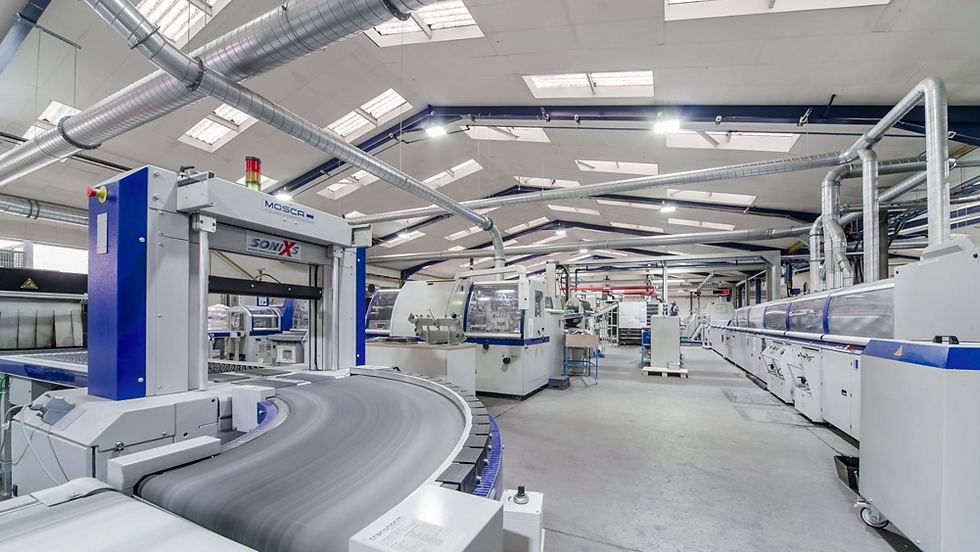
Another established UK business has entered administration after a period of financial pressure, with the collapse of Precision Colour Printing Limited putting jobs, suppliers and creditors under significant strain.
The Telford-based printing specialist entered administration on 27 August 2026, with Michael Denny and Michael Magnay of Alvarez & Marsal appointed as joint administrators.
The development is particularly notable because it comes only five months after a change in ownership.
From New Ownership and Investment Plans to Administration
Precision Colour Media Limited became the company's person with significant control on 20 March 2026, replacing Hypax Gamma Holdco Limited. Companies House records confirm the change in control and the subsequent changes to the company's corporate structure.
At the time, the business presented the ownership change as a positive development.
Precision Colour Printing announced that its new ownership would bring renewed investment into the business, including the planned installation of an eight-colour Heidelberg Speedmaster XL 105 press with CutStar reel sheeter.
The company described the investment as an opportunity to strengthen its printing and finishing capabilities and build on its position in the market.
Only months later, however, the business was in administration.
That rapid change highlights just how quickly financial pressure can develop in capital-intensive businesses where cash flow, working capital, customer demand and supplier relationships are closely interconnected.
Cash Flow Problems Were Already Emerging
Reports leading up to the administration indicated significant operational difficulties.
The company's presses had reportedly been operating intermittently, with shortages of paper and other consumables affecting production. Some customers were understood to have moved work to competing printers as a result.
For a business operating large-scale printing equipment, disruption to production can have an immediate knock-on effect.
If machines are not running, revenue can fall while many of the company's fixed costs continue.
At the same time, suppliers may become increasingly cautious about extending credit, creating additional pressure on working capital.
This can create a dangerous cycle:
Reduced production → delayed orders → reduced cash receipts → supplier pressure → further disruption → loss of customer confidence.
Once that cycle accelerates, even an established company with a long trading history can find itself under severe financial pressure.
A Business With a Significant Customer Base
Precision Colour Printing is not a small local printer.
The company has more than 30 years of experience and specialises in magazine, catalogue and brochure printing, alongside binding, mailing and fulfilment services. Its website states that it works with more than 400 magazine titles across the UK and Ireland.
That means the consequences of the administration extend beyond the company's employees.
Publishers and other customers relying on Precision Colour Printing for scheduled production may need to find alternative suppliers quickly.
Indeed, the administration has already had an impact on publishing schedules. The publisher of 2000 AD and Judge Dredd Megazine announced that an issue would be delayed after needing to secure alternative printing arrangements.
What About Employees?
Reports have put the number of jobs potentially affected at between approximately 160 and 186, depending on the point of reporting and how the workforce is being described.
The administrators have said approximately 160 employees are currently associated with the business, with no immediate redundancies following their appointment.
The administrators are now assessing the company's options, including whether the printing operation can be sold as a going concern.
That could provide a route for the business, or parts of it, to continue operating under new ownership.
For employees, customers and suppliers, however, the immediate priority is understanding what happens to existing contracts, outstanding invoices, work in progress and payments.
Creditors Need to Act Quickly
For businesses supplying Precision Colour Printing, the administration creates an obvious question:
What happens to the money you are owed?
When a customer enters administration, simply waiting for the administrator to contact you may not be the best strategy.
Creditors should establish:
How much money is outstanding
Which invoices remain unpaid
Whether any invoices are disputed
Whether goods or materials remain on the debtor's premises
Whether contractual retention-of-title provisions may apply
Whether there are guarantees or other security available
Whether there are connected companies or alternative trading entities
Whether any payments made before the insolvency require further investigation
What documentation is required to submit a claim
The sooner the position is established, the better.
The Warning for UK Suppliers
The Precision Colour Printing situation also demonstrates why credit monitoring matters even after a customer appears financially stable.
A company can have:
A long trading history
Major customers
Established management
Significant equipment and assets
New investment
A recent ownership change
…and still experience severe financial distress within months.
The ownership change itself should not be treated as evidence that caused the administration. There is currently no basis to make that claim.
But the five-month timeline is a reminder that a change of ownership can materially change a company's financial structure, strategy, funding requirements and risk profile.
For suppliers operating on credit terms, monitoring should not stop once a customer passes an initial credit check.
What Happens Next?
Alvarez & Marsal are now examining the company's financial position and available options.
One potential outcome is a sale of the business or its assets to a new owner, potentially allowing some or all of the operation to continue.
Another possibility is a more significant restructuring of the business, depending on what the administrators determine is commercially viable.
For unsecured creditors, recovery will depend on the company's available assets, liabilities, security arrangements and the outcome of the administration.
There is no guarantee that creditors will recover the full amount owed.
The Bigger Picture
Precision Colour Printing is another example of the increasingly difficult environment facing UK businesses carrying significant operational costs while dealing with changing customer demand, inflationary pressures and tight working capital.
For creditors, the lesson is straightforward:
Don't wait until an administration notice lands to start thinking about recovery.
If payments are becoming slower, communication is deteriorating, orders are being cancelled, promises to pay are repeatedly missed or a customer's circumstances suddenly change, those can be reasons to review the exposure before the situation becomes irreversible.
Owed Money by a Business That Has Gone Into Administration?
If your customer has entered administration, liquidation or another formal insolvency process, the recovery options can become more complicated — but that does not necessarily mean the money is lost.
At Red Flag Specialists, we help businesses investigate debtors, trace assets and pursue outstanding debts using lawful, proportionate recovery strategies.
The earlier you act, the more options may be available.
Don't wait for the next insolvency notice.
If a customer owes you money, speak to Red Flag Specialists today.
Debt Recovery | Asset Tracing | Investigations | International Recovery


Comments