


Wynsors Closing 17 UK Stores: What Creditors Need to Know
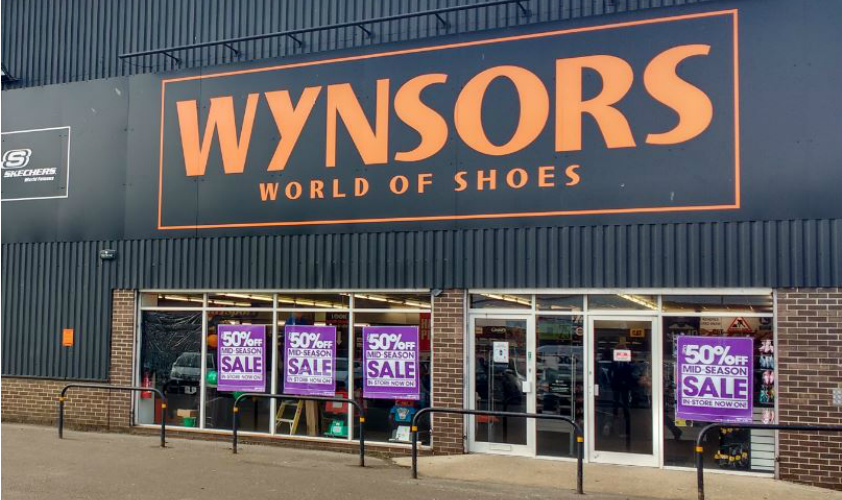
Wynsors World of Shoes is closing 17 stores across the UK as the long-established footwear retailer restructures its physical estate — another warning sign for suppliers, landlords and businesses exposed to the UK retail sector.
Closing-down sales are already underway at affected stores, with discounts reportedly reaching as high as 60% on selected products.
But behind the clearance signs and reduced-price footwear sits a much bigger question:
What does the latest restructuring mean for the businesses and creditors owed money?
17 Wynsors stores set to close
Wynsors is preparing to permanently close 17 of its UK stores.
The locations announced for closure are:
Crewe
Leeds
Sheffield
Wakefield
Fleetwood
Burnley
Oldham
Salford
Bury
Rochdale
Hanley
Birkenhead
Bootle
Bacup
Bolton
Gateshead
Sunderland
The closures represent a significant reduction in Wynsors' physical retail footprint. Reports indicate that the business had around 47 stores, meaning the planned closures affect a substantial proportion of its estate.
Wynsors has confirmed that the closures affect selected stores, while its remaining branches and online operation continue to trade.
Some locations have already begun clearance sales, with reports of discounts of up to 60% on selected products.
Why is Wynsors closing stores?
The decision comes against a difficult backdrop for UK retail.
Wynsors' private equity owner, Modella Capital, had already been considering significant changes to the business, including cost reductions and changes to its store estate.
In June, reports emerged that Wynsors staff had been briefed about plans for a Company Voluntary Arrangement (CVA). A CVA is a formal restructuring process that allows an eligible company to reach an agreement with creditors to repay some or all of its debts over an agreed period.
The subsequent store closures demonstrate the extent of the pressure facing the retailer.
For businesses supplying retailers, this is an important distinction:
A company does not need to enter administration before creditors should become concerned.
Financial pressure often becomes visible through restructuring, store closures, delayed payments, cost-cutting and changes to trading arrangements long before a formal insolvency event occurs.
The warning signs suppliers should not ignore
For suppliers and commercial creditors, the Wynsors situation is another reminder that waiting for an insolvency announcement can be a costly strategy.
If a customer starts experiencing financial pressure, businesses should be monitoring for signs such as:
Payments becoming increasingly late
Requests for extended payment terms
Outstanding invoices accumulating
Changes in senior management
Store closures or site consolidation
Significant cost-cutting
Restructuring or CVA discussions
Reduced orders
Sudden changes in purchasing behaviour
Increasing reliance on payment plans
Individually, these signs may not mean a company is about to fail.
Together, however, they can indicate that a debtor's financial position requires closer attention.
What does this mean for suppliers?
For suppliers with outstanding invoices, the priority should be understanding the exposure before the situation deteriorates further.
If a business owes you £5,000, £20,000, £50,000 or more, simply continuing to send statements and hoping the account will eventually be settled is not a recovery strategy.
The first question should be:
What is the current position of the debtor?
That can involve reviewing the company's trading position, corporate structure, directors, related entities, available assets and other relevant intelligence.
The objective is not simply to establish that money is owed.
It is to understand what recovery options actually exist.
Retail closures create wider creditor risks
When physical stores close, there can be consequences beyond the retailer itself.
Suppliers may be exposed to unpaid invoices.
Landlords may face rent arrears.
Contractors may be waiting for payment.
Service providers may have outstanding accounts.
Transport and logistics businesses may have unpaid charges.
Manufacturers may have stock, goods or materials tied up in the relationship.
For smaller businesses, a single significant unpaid account can have a disproportionate impact on cash flow.
This is why credit control and debt recovery should not be treated as an administrative exercise.
An unpaid invoice is an asset — and it needs to be actively managed.
Don't wait for administration
One of the biggest mistakes creditors can make is assuming that they should only act once a company formally enters administration or liquidation.
By that point, the recovery landscape can be very different.
Once an insolvency process begins, creditors may find themselves competing for distributions alongside other creditors, subject to the relevant insolvency rules and priorities.
Before that happens, there may be opportunities for commercial negotiation and recovery.
That does not mean every struggling business is deliberately avoiding payment.
It means creditors need to understand the situation early enough to make informed decisions.
What should creditors do if they are owed money?
If your business is exposed to a company showing signs of financial pressure, consider taking action early.
1. Establish exactly what is outstanding
Review invoices, statements, purchase orders, contracts, delivery records and correspondence.
Make sure you have a clear and defensible evidence trail.
2. Review the debtor
Look beyond the invoice.
Investigate the company's current position, ownership structure, directors and other relevant corporate information.
3. Assess recovery options
Different situations require different approaches.
A commercial negotiation may be appropriate in one case, while another may require a more formal escalation.
4. Don't allow the debt to age unnecessarily
The older a debt becomes, the more difficult recovery can potentially become.
Early intervention can provide more options.
5. Consider professional recovery support
If internal credit-control efforts have failed, professional debt recovery specialists can provide another route before litigation becomes necessary.
The bigger picture: UK retail remains under pressure
Wynsors is not an isolated case.
The UK retail sector continues to face pressure from changing consumer behaviour, operating costs, rents, wage costs, business rates and challenging trading conditions.
Store closures are therefore becoming an increasingly important indicator of how retailers are responding to financial pressure.
But for suppliers, the lesson goes beyond retail.
If a customer is restructuring, cutting locations or showing signs of financial distress, your exposure needs to be reviewed too.
What should creditors learn from Wynsors?
The Wynsors closures are a reminder that financial distress rarely appears overnight.
There can be warning signs.
The businesses that identify those signs early are often better positioned to protect their cash flow and decide how aggressively they need to pursue outstanding debts.
At Red Flag Specialists, we believe debt recovery should not start with endless emails and unanswered phone calls.
It should start with intelligence, verification and a clear recovery strategy.
Where appropriate, we combine intelligence-led investigation with professional debt recovery and face-to-face enforcement to help businesses pursue money they are legitimately owed.
Someone owes your business money?
Don't wait for the red flags to become an insolvency notice.
If you're dealing with an overdue commercial debt, talk to Red Flag Specialists about your recovery options.
WE RECOVER DEBT. YOU FOCUS ON BUSINESS.
This article is provided for general information and does not constitute legal or insolvency advice. Every debt recovery situation is different and should be assessed on its individual circumstances.


Comments